 Jun 04, 2026 - 0
Minutes read
Jun 04, 2026 - 0
Minutes read
Creative Uses for Jute: DIY Projects, Crafts, and Home Decor Ideas
25 Creative Jute DIY Projects (with step-by-step instructions)
Creative Uses for Jute: DIY Projects, Crafts, and Home Decor Ideas
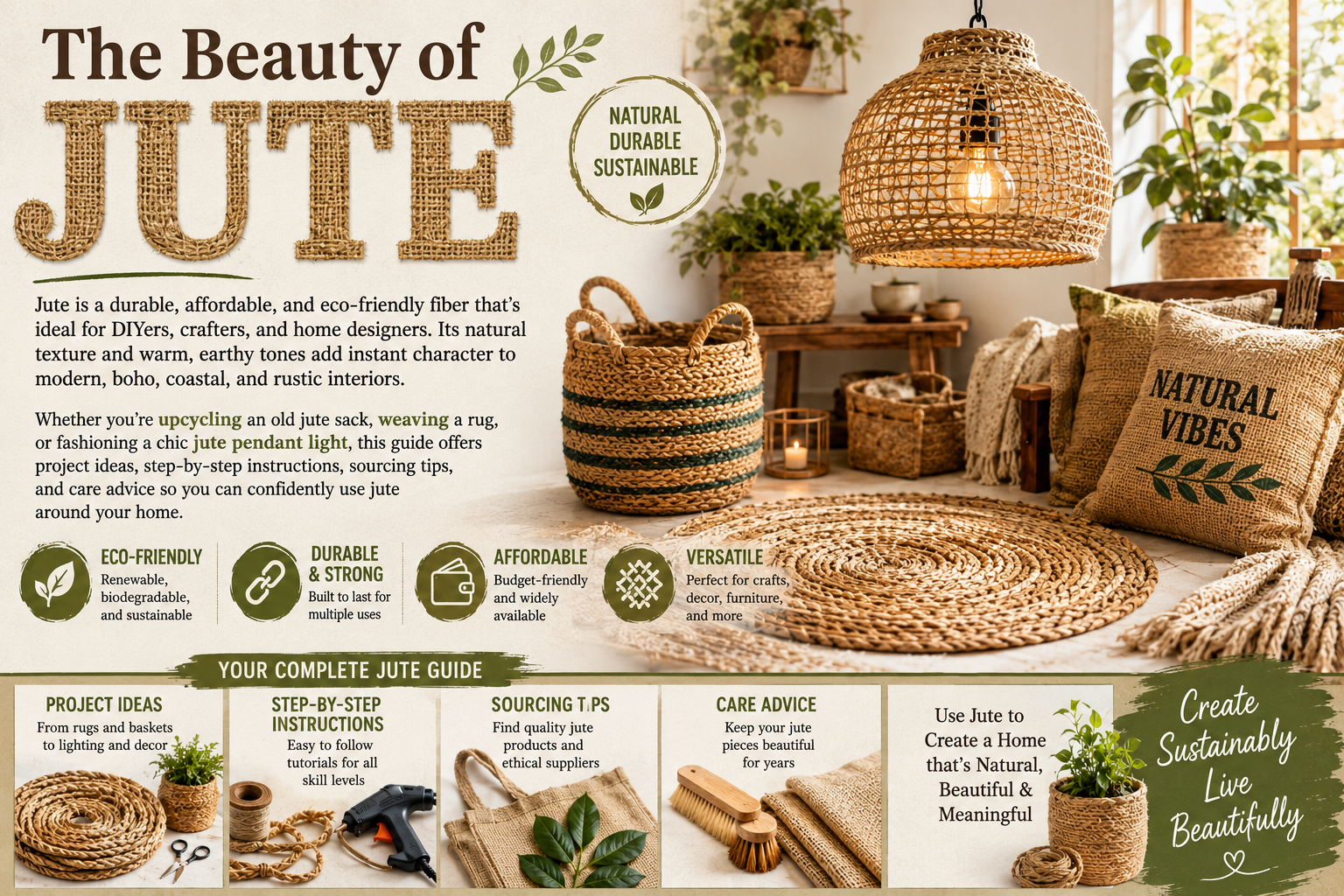
Jute is a durable, affordable, and eco-friendly fiber that’s ideal for DIYers, crafters, and home designers. Its natural texture and warm, earthy tones add instant character to modern, boho, coastal, and rustic interiors. Whether you’re upcycling an old jute sack, weaving a rug, or fashioning a chic jute pendant light, this guide offers project ideas, step-by-step instructions, sourcing tips, and care advice so you can confidently use jute around your home.
Why Choose Jute for DIY and Home Decor?
Eco-friendly: Jute is renewable, biodegradable, and typically requires fewer inputs than many other fibers.
Affordable: Raw jute and jute products are often less expensive than premium natural fibers.
Versatile: Jute can be woven, braided, glued, stitched, and combined with other materials like cotton, leather, or metal.
Textural appeal: Its coarse, rustic feel provides contrast against smooth fabrics and modern finishes.
Quick safety note: Jute fibers can shed fine dust and occasionally irritate sensitive skin. Work in a well-ventilated area, wear a dust mask if sanding or cutting treated jute, and use gloves when needed.
What You’ll Need: Basic Jute Materials & Tools
Jute rope/twine (various diameters)
Jute fabric or burlap (by the yard)
Jute sacks/coffee bags (upcycled)
Hot glue gun and glue sticks
Fabric glue/textile adhesive
Scissors, rotary cutters, utility knives
Sewing needle and strong thread (upholstery or waxed)
Staple gun (for upholstery projects)
Measuring tape, ruler, and fabric chalk
Jute-compatible stiffener or textile medium (optional)
Sealant or water-repellent spray (for outdoor use)
Sewing machine (heavy-duty recommended) or hand-sewing supplies
Embellishments: beads, tassels, leather straps, metal rings
Protective gear: gloves, dust mask, eye protection
The 25 projects below range from beginner-friendly to advanced. Each includes an overview, materials, steps, and styling tips.
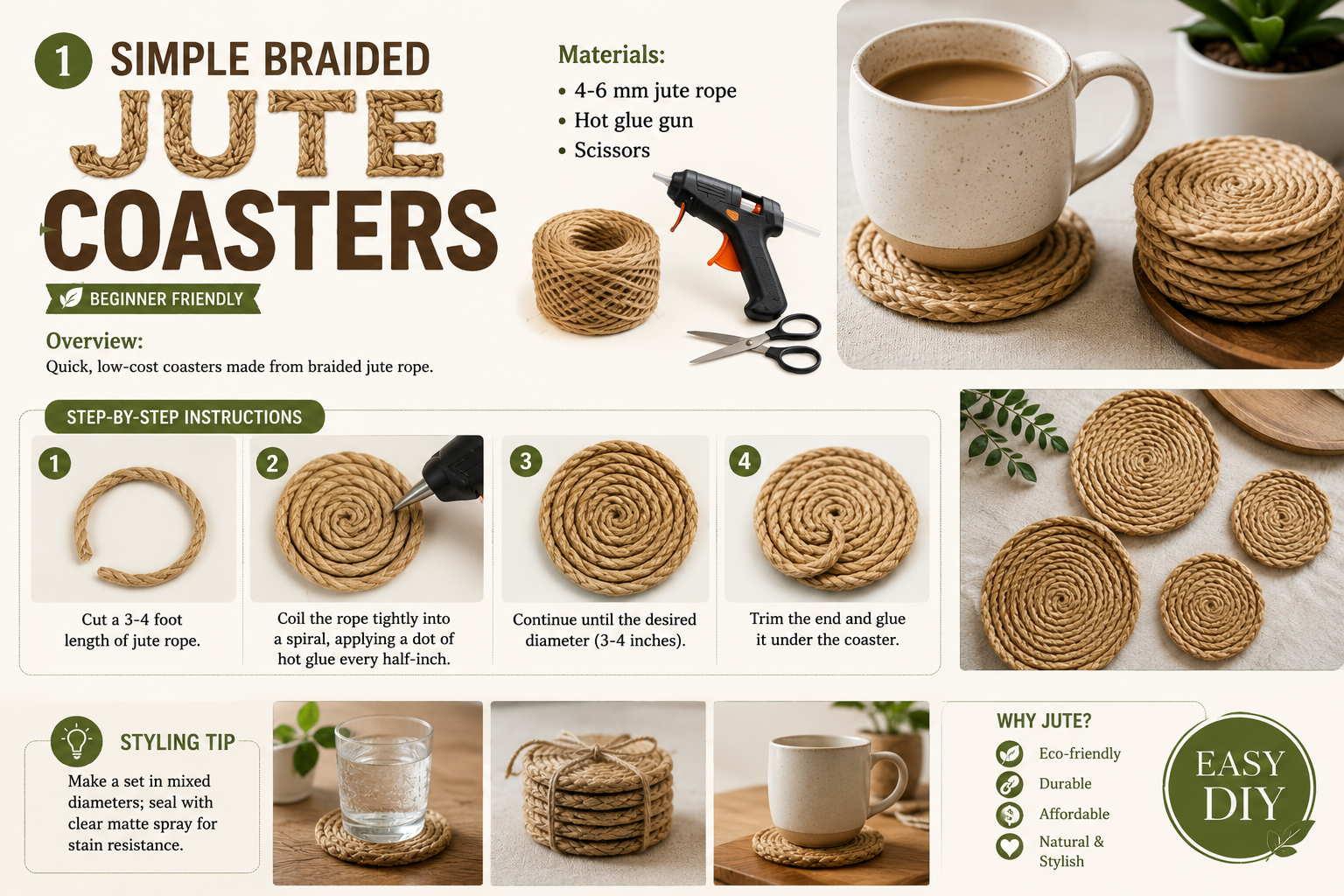
Simple Braided Jute Coasters (Beginner)
Overview: Quick, low-cost coasters made from braided jute rope.
Materials: 4–6 mm jute rope, hot glue gun, scissors.
Steps:
Cut a 3–4 foot length of jute rope.
Coil the rope tightly into a spiral, applying a dot of hot glue every half-inch.
Continue until the desired diameter (3–4 inches).
Trim the end and glue it under the coaster.
Styling tip: Make a set in mixed diameters; seal with clear matte spray for stain resistance.
Jute-Wrapped Planters (Beginner)
Overview: Transform plain terracotta or plastic pots by wrapping them in jute.
Materials: Jute twine, hot glue, plant pot, scissors.
Steps:
Clean the pot surface.
Start at the base: apply a line of hot glue and press the rope firmly.
Wrap upward, gluing as you go, keeping rows tight.
Finish at the rim and trim.
Styling tip: Add leather straps or a painted band near the top for contrast.
Burlap Table Runner with Stenciled Design (Beginner–Intermediate)
Overview: Use burlap fabric and fabric paint to create a rustic runner.
Materials: Burlap, fabric paint, stencil, paintbrush or sponge, sewing machine or hem tape.
Steps:
Cut burlap to desired runner size plus 1" for hems.
Hem edges or use a frayed-edge look by leaving raw and securing the underside with hem tape.
Center stencil and dab paint; let dry thoroughly.
Iron on low setting (with cloth barrier) if paint requires heat setting.
Styling tip: Pair with linen napkins for soft contrast.
Jute Storage Baskets (Beginner–Intermediate)
Overview: Coil and stitch jute rope into baskets for functional storage.
Materials: Thick jute rope (8–12 mm), heavy-duty needle, waxed thread, scissors.
Steps:
Start coiling rope and secure each coil to the previous with whip stitches.
Continue coiling until the base diameter is reached.
Raise sides by adjusting stitch angle; continue until desired height.
Finish and tuck ends securely.
Styling tip: Line baskets with natural cotton to protect delicate items.
Upcycled Jute Coffee Sack Throw Pillow Covers (Intermediate)
Overview: Turn repurposed coffee sacks into stylish cushion covers.
Materials: Cleaned coffee sack, pillow insert, sewing machine, zipper or envelope closure supplies.
Steps:
Cut fabric to pillow size plus seam allowance.
Sew three sides, insert pillow, and finish with zipper/envelope closure.
Add trim or pom-poms if desired.
Styling tip: Use bold graphic sacks as statement cushions in neutral rooms.
Macramé Plant Hangers Using Jute (Beginner–Intermediate)
Overview: Use jute twine for a natural macramé hanger.
Materials: Jute twine, wooden ring, scissors, measuring tape, potted plant.
Steps:
Cut four lengths of twine (3–4x hanger length).
Attach to the ring with lark’s head knots.
Create square knots in sections and form a basket using half knots.
Tie a gathering knot and trim.
Styling tip: Use varying knot patterns for layered texture.
Braided Jute Rug (Advanced)
Overview: Make a durable braided rug for entryways or kitchens.
Materials: Wide jute rope, heavy-duty needle and thread, fabric backing (optional), non-slip rug pad, sewing machine capable of quilting layers, or hand-stitching skills.
Steps:
Create long braided strips by plaiting three rope lengths; stitch braid segments together end-to-end.
Coil the braid into a spiral and hand-stitch with strong thread to secure.
Attach fabric backing and apply a rug pad for stability.
Styling tip: Make semi-circular rugs for doorways or create runners for hallways.
Jute Pendant Light Shade (Intermediate)
Overview: Use jute rope to craft a warm, textured pendant lamp shade.
Materials: Jute rope, balloon or mold, PVA glue diluted with water, light kit and bulb (LED recommended), wax paper.
Steps:
Inflate the balloon and wrap it with wax paper.
Coat the rope with diluted PVA and wrap it around the balloon in random or patterned layers, leaving an open top and a hole for the socket.
Let dry fully (24–48 hours), then pop the balloon and remove.
Insert light kit (use LED bulbs to avoid heat).
Safety tip: Ensure proper clearance from the bulb; always use low-heat LEDs and do not cover kill vents on sockets.
Styling tip: Create multiple small pendants grouped at varying heights.
Jute Table Placemat with Leather Trim (Beginner–Intermediate)
Overview: Combine jute coiling with leather trim for an upscale look.
Materials: Jute rope, leather strip, glue, and heavy-duty needle.
Steps:
Coil the rope into a placemat shape, gluing as you go.
Affix leather trim around the edge with glue and small stitches.
Styling tip: Use contrast leather colors (tan or black) to suit your tableware.
Jute Wall Hanging with Tassels and Dye (Intermediate)
Overview: Weave a textured wall hanging using jute ropes, dyed accents, and wooden dowels.
Materials: Jute rope, natural or fiber dyes, wooden dowel, scissors, and comb.
Steps:
Dye select jute pieces for color accents; let dry.
Cut varied lengths; fold over the dowel and secure with lark’s head knots.
Trim ends to create shapes (angled, V, or rounded).
Knot or add tassels for interest.
Styling tip: Pair with houseplants and rattan furniture for a layered natural look.
Woven Jute Lampshade (Advanced)
Overview: Weave jute strips around a wire frame for a bespoke shade.
Materials: Wire lampshade frame, jute strips, pliers, fabric glue, light kit.
Steps:
Cut jute into strips and prepare the frame.
Weave strips horizontally and secure ends with glue or stitching.
Ensure even tension; leave a socket opening.
Safety tip: Use LED bulbs and test for heat build-up before regular use.
Jute-Covered Photo Frames (Beginner)
Overview: Add a rustic frame to photos and art with jute rope trim.
Materials: Plain wooden frame, glue gun, jute rope or twine.
Steps:
Apply glue along the frame edge.
Press the rope into glue, wrapping corners neatly.
For extra interest, wrap only sections for layered texture.
Styling tip: Use frames with white mats to contrast jute’s warmth.
Jute Coated Terracotta Vase (Beginner)
Overview: Dress up an inexpensive vase with jute twine details.
Materials: Terracotta vase, jute twine, glue, sealant.
Steps:
Apply a line of glue and wrap twine tightly.
Continue to create bands or cover most of the vase.
Seal with a matte clear coat.
Styling tip: Use for dried stems and pampas grass.
Jute Lampshade with Fabric Liner (Intermediate)
Overview: Create a jute exterior with a soft fabric interior for diffused light.
Materials: Jute fabric or braided rope, cotton fabric for the liner, glue, and lampshade frame.
Steps:
Attach the cotton liner to the frame first, then secure the jute on the outside.
Ensure the liner does not touch the bulb; use LED bulbs for safety.
Styling tip: Choose linen or muslin for a soft glow.
Jute Bookmark with Tassel (Beginner)
Overview: Quick handmade gifts using jute twine and embellishments.
Materials: Jute twine, small tassel or leather piece, glue.
Steps:
Cut a length of twine (6–8 inches), braid if desired.
Attach the tassel to one end and knot the other.
Styling tip: Include as a gift with a favorite paperback.
Jute-Lined Tray (Intermediate)
Overview: Line a tray with jute fabric or braided rope for a serving or catch-all tray.
Materials: Wooden tray, jute fabric or braided rope, glue, scissors.
Steps:
Measure the tray base and cut jute fabric accordingly.
Glue into place; for rope style, coil and glue as with coasters.
Styling tip: Use for coffee table styling with candles and small books.
Jute Wreath (Beginner)
Overview: Make a seasonal wreath by wrapping a foam ring with jute and adding accents.
Materials: Foam ring, jute rope, faux greenery, hot glue, ribbon.
Steps:
Wrap the ring completely with jute, securing with glue.
Affix greenery clusters and ribbons strategically.
Styling tip: Add shells and driftwood for coastal themes.
Jute Book Covers (Intermediate)
Overview: Protect books with hand-sewn jute covers—great for journals or sketchbooks.
Materials: Burlap or jute fabric, sewing supplies, and interfacing for structure.
Steps:
Cut fabric to book size plus seams.
Attach interfacing for structure and sew edges.
Add a button or leather strap closure.
Styling tip: Personalize with stamped initials or painted motifs.
Jute Curtain Tiebacks (Beginner)
Overview: Make rustic tiebacks by braiding jute and attaching tassels.
Materials: Jute rope, tassels, leather loops.
Steps:
Braid lengths of jute and knot ends.
Attach tassels or leather hardware.
Styling tip: Use on linen curtains for breezy, textural appeal.
Jute Jewelry: Necklaces and Bracelets (Beginner–Intermediate)
Overview: Create boho-style jewelry with jute, beads, and metal accents.
Materials: Fine jute twine, beads, clasps, and glue.
Steps:
Braid or knot twine and string beads.
Finish with jump rings and clasps, or tie adjustable knots.
Styling tip: Pair with brass pendants or wooden beads for a natural look.
Jute-Covered Mirror Frame (Intermediate)
Overview: Use jute rope or fabric strips to update a mirror frame.
Materials: Mirror, rope or fabric, glue, scissors.
Steps:
Wrap the frame tightly with jute, gluing frequently.
Add layered coils or create patterns.
Styling tip: Hang above a console table with coastal accents.
Jute-Padded Headboard (Advanced)
Overview: Create a statement headboard upholstered in jute fabric.
Materials: Plywood board, foam batting, jute fabric, staple gun, decorative tacks or buttons.
Steps:
Cut plywood to size and attach foam tape or batting.
Pull the jute fabric over and staple it to the back.
Add decorative tufting or tacks as desired.
Styling tip: Pair with cool-toned bedding to balance warmth.
Jute Drawer Liners (Beginner)
Overview: Line drawers with thin burlap to protect surfaces and add scent control.
Materials: Burlap sheets, scissors, spray adhesive.
Steps:
Measure drawers and cut burlap to fit.
Lightly glue into place.
Styling tip: Use in linen closets or dresser drawers for breathable storage.
Jute Photo Backdrop for Parties (Intermediate)
Overview: Create a textural photo wall for a wedding, birthday, or event.
Materials: Burlap panels, wooden frame, embellishments like garlands and lights.
Steps:
Attach burlap to the frame securely.
Layer with greenery, paper flowers, and string lights.
Styling tip: Use for bohemian-themed events or outdoor receptions.
Jute Composite Shelving (Advanced / Maker)
Overview: Use jute fiber-reinforced panels bonded with bio-resin for custom shelves and panels.
Materials: Jute fiber mats or woven jute, bio-resin, molds, curing equipment, and safety gear.
Steps:
Lay jute mats in the mold and saturate with bio-resin.
Cure per resin instructions and demold.
Finish edges and mount safely.
Note: This is a technical project—work with appropriate PPE and follow resin safety.
Styling tip: Use composite panels with visible jute texture for eco-focused interiors.
Styling Ideas: Where Jute Works Best in the Home
Entryways: durable jute runners, catch-all baskets, and rustic trays.
Living rooms: textured rugs, wall hangings, lampshades, and throw pillows made from jute sacks.
Kitchens: placemats, coasters, and storage baskets—avoid direct contact with water.
Bedrooms: headboards, drawer liners, and woven storage—soft textiles alongside jute balance comfort.
Bathrooms: keep jute away from constant moisture; use jute for baskets or decorative accents only.
Outdoor and covered patios: treated jute for occasional outdoor use; avoid constant exposure to rain unless treated for water resistance.
Sourcing Jute: What to Look For
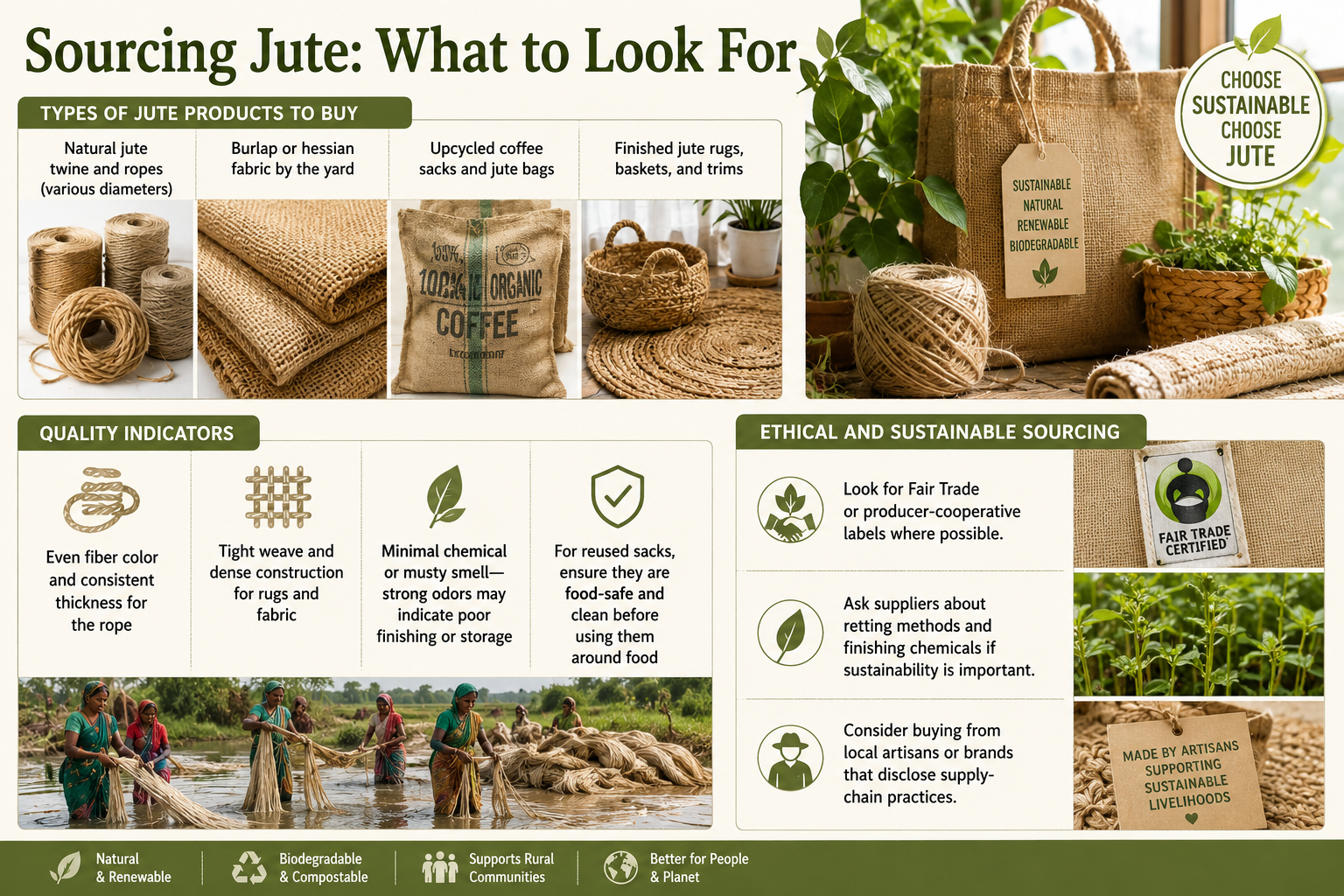
Types of jute products to buy:
Natural jute twine and ropes (various diameters)
Burlap or hessian fabric by the yard
Upcycled coffee sacks and jute bags
Finished jute rugs, baskets, and trims
Quality indicators:
Even fiber color and consistent thickness for the rope
Tight weave and dense construction for rugs and fabric
Minimal chemical or musty smell—strong odors may indicate poor finishing or storage
For reused sacks, ensure they are food-safe and clean before using them around food
Ethical and sustainable sourcing:
Look for Fair Trade or producer-cooperative labels where possible.
Ask suppliers about retting methods and finishing chemicals if sustainability is important.
Consider buying from local artisans or brands that disclose supply-chain practices.
Care and Maintenance for Jute Projects
General care:
Keep jute dry whenever possible to avoid mildew. If it gets wet, air-dry thoroughly in sunlight if available.
Vacuum rugs and woven items regularly to remove grit that wears fibers.
Spot-clean with a damp cloth and mild soap; blot rather than rub.
Avoid machine washing for items made from untreated jute; check product labels.
Stain removal tip:
For oil stains, sprinkle cornstarch to absorb oil before brushing and spot-cleaning.
For spills, blot immediately and use a gentle detergent solution; rinse and let dry fully.
Long-term storage:
Store jute items in breathable cotton bags or wrapped in acid-free paper to prevent dust build-up.
Avoid sealed plastic, which traps moisture and can promote mildew.
Working With Jute: Tips and Troubleshooting
Prevent fraying: Seal cut ends with a dab of clear-drying fabric glue or fray-check.
Strengthen seams: Use double-stitching and strong thread for sewn jute pieces.
Minimize shedding: After construction, gently brush or vacuum to remove loose fibers; sealing edges helps.
Heat and flames: Avoid exposing jute to open flames; for lighting projects, keep jute away from heat sources and use LED bulbs.
Eco Considerations and Upcycling Ideas
Reuse coffee sacks for pillows, upholstery patches, or tote bags.
Upcycle worn jute rugs into smaller mats, coasters, or braided baskets.
Compost untreated jute scraps in a home compost if no synthetic finishes were applied.
Project Costs and Time Estimates
Small projects (coasters, bookmarks, planters): $5–$20 and 30–90 minutes.
Medium projects (baskets, placemats, throw pillows): $20–$80 and 2–6 hours.
Large projects (rugs, headboards, pendant lights): $80–$400+ and several hours to days, depending on complexity. Costs vary by material quality, tools already owned, and whether you’re buying ready-made jute ropes or hand-spun artisan varieties.
Inspiration Sources and Further Learning
Local craft stores and fabric markets for jute supplies.
Artisan markets and Etsy for unique upcycled jute sacks and handmade jute goods.
Community classes and makerspaces often host weaving, macramé, and upholstery workshops that work well with jute.
Books and online tutorials on natural-fiber crafting and sustainable DIY.
SEO and Content Tips for Sharing Your Jute Projects
Use keywords: “jute DIY,” “jute crafts,” “how to use jute,” “burlap decor,” “jute rug DIY,” and “sustainable home decor.”
Create step-by-step photo tutorials and short videos—visuals perform well for craft content.
Offer printable patterns or templates for larger pieces (rugs, headboards).