 Jun 02, 2026 - 0
Minutes read
Jun 02, 2026 - 0
Minutes read
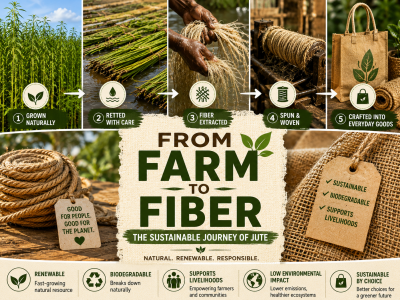
From Farm to Fiber: The Sustainable Journey of Jute
Planting and agronomy
From Farm to Fiber: The Sustainable Journey of Jute
Jute, often called the “golden fiber,” is experiencing renewed interest as brands and consumers search for low-impact materials. But jute’s sustainability story begins long before it becomes a tote bag, rug, or geotextile. Understanding how jute is grown, processed, and brought to market reveals both its environmental promise and the practical challenges producers and buyers must navigate.
This article traces jute’s full lifecycle: its agricultural roots, the biochemical magic of retting, fiber extraction and textile production, downstream manufacturing, supply-chain considerations, and the social and environmental trade-offs involved. Whether you’re a sustainability manager at a U.S. retailer, a product designer, or an eco-conscious shopper, this guide explains how jute moves from farm to fiber — and how to make responsible choices at each step.
What Is Jute? A Quick Primer
Botanical background
Jute comes from plants in the Corchorus genus, primarily Corchorus olitorius and Corchorus capsularis. These bast-fiber plants produce long strands in their inner bark that are harvested and processed into yarn and fabric. Native to South and Southeast Asia, jute thrives in warm, humid conditions and fertile, often alluvial soils.
Physical characteristics
Jute fibers are known for strength, length, and a coarse but resilient texture. Chemically composed primarily of cellulose and lignin, they have good tensile strength and insulating properties, although they lack the softness of cotton or flax (linen).
Key producing regions
The global jute belt centers on Bangladesh and India, which together produce the majority of the world’s jute. Smaller-scale production occurs in parts of Southeast Asia and select tropical regions. Production patterns are shaped by climate, traditional knowledge, and local industry infrastructure.
Climate and soil requirements
Jute prefers:
Warm temperatures (20–40°C or 68–104°F)
High humidity and ample rainfall
Fertile, well-drained alluvial soils
Flat fields where controlled waterlogging for retting is feasible
Farmers typically sow jute during the wet season. Seeds are sown densely, and plants grow quickly, maturing in approximately 3–6 months depending on variety and local conditions. Crop management is generally low-input relative to industrial cotton: jute requires moderate fertilization, limited pesticides in many traditional systems, and benefits from crop rotations with rice and other staples.
Smallholders and community farming
Much of jute cultivation is done by smallholder farmers. These farms play a critical role in rural economies, providing seasonal income and employment for family members. Cooperative structures and local mills often form the backbone of the supply chain.
Harvesting and the Critical Step: Retting
Harvest timing
Harvest occurs when stems reach the desired maturity — often when fiber development is optimal but before the stalks become too woody. Timing is crucial: premature harvesting yields weak fibers; over-mature stalks produce coarse, lower-quality strands.
What is retting?
Retting is the microbial decomposition process that separates the valuable bast fibers from the stalk’s woody core. Traditionally, retting is performed by submerging bundles of jute stalks in stagnant or slow-flowing water bodies for days to weeks. Microorganisms break down pectins and other binding materials, loosening the fibers for extraction.
Traditional retting methods
Open-pond or river retting is common in many producing regions due to its low cost and long-standing practice. While effective, it can create effluent with high biological oxygen demand (BOD), depleting oxygen in water bodies and harming aquatic ecosystems if not managed properly.
Improved retting techniques
To address environmental concerns and improve fiber quality, alternatives include:
Tank-based retting systems that reuse or treat water
Enzymatic or microbial retting using controlled cultures that speed the process and reduce pollution
Dew retting, where stalks are spread on fields and exposed to morning dew and microbes, though this is slower and weather-dependent. Adopting improved retting methods increases upfront capital needs but results in cleaner effluents, more consistent fiber quality, and reduced environmental impact.
Fiber Extraction: Stripping, Washing, and Drying
Stripping and grading
After retting, workers manually or mechanically strip fibers from stalks. Skilled labor is important: properly stripped fibers have higher quality and longer length. Once extracted, fibers are graded by color, length, and strength — factors that influence downstream yarn quality.
Washing and impurity removal
Extracted fibers are washed to remove plant residues, pectin fragments, and dirt. In traditional systems, washing often occurs in the same water bodies used for retting; improved facilities use separate washing areas and wastewater treatment to avoid compounding water pollution.
Drying and handling
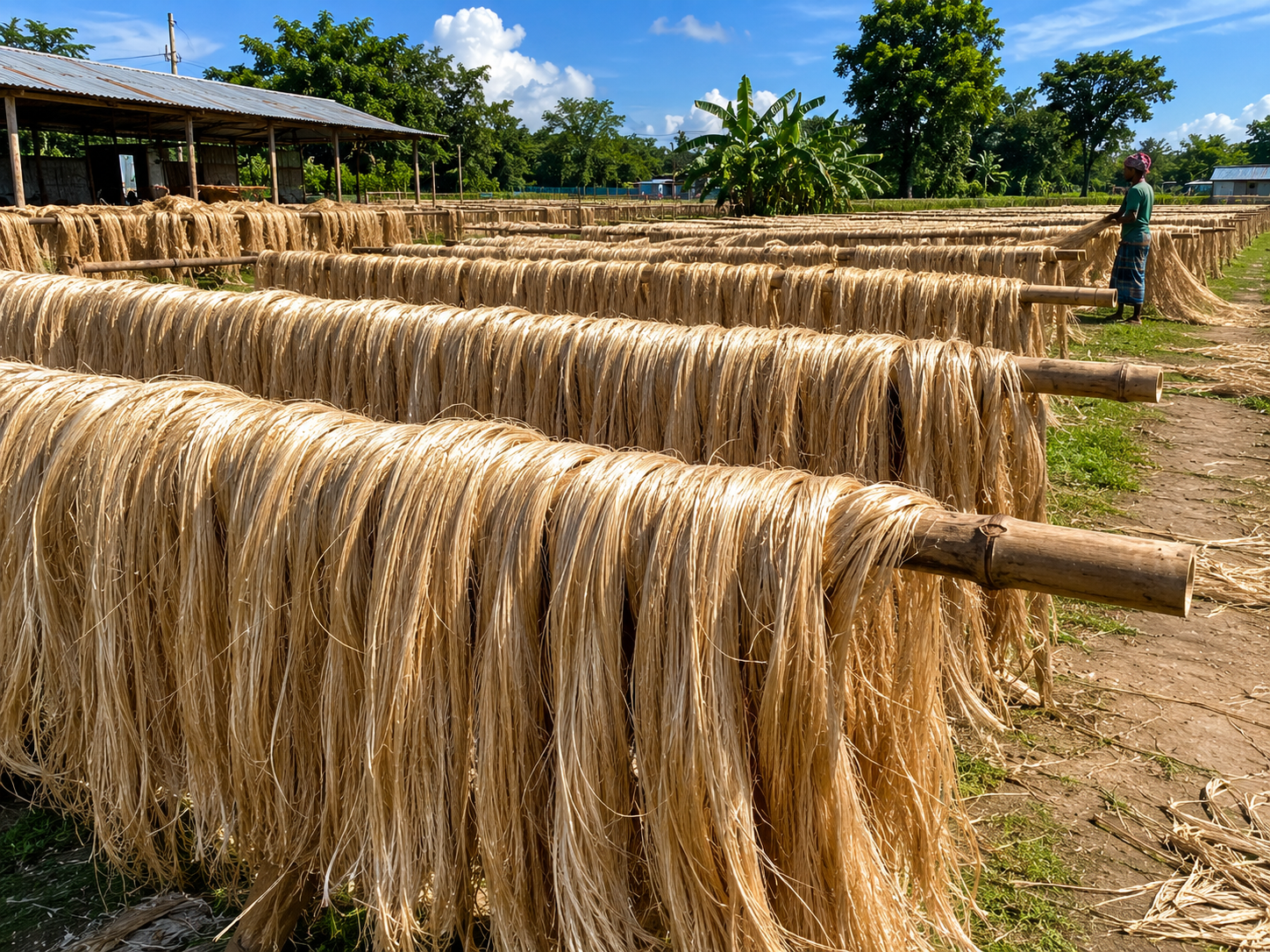
Sun drying remains common due to its low cost, but inconsistent sun exposure can impact fiber dryness and quality. Mechanical drying or covered drying yards help control moisture and maintain consistent fiber quality, especially when preparing fibers for spinning and export.
Spinning, Weaving, and Textile Production
Spinning into yarn
Carding, combing, and spinning turn raw jute fibers into yarn. Fiber length, retting quality, and evenness affect yarn strength and uniformity. Spinning can be done on traditional wheels for artisanal products or industrial machines for mass production.
Weaving and fabric formation
Jute yarn is woven into a variety of fabrics, from coarse hessian (burlap) used in sacks to finer woven textiles for rugs and upholstery. Modern mills blend jute with cotton or other fibers to soften hand-feel and expand fashion and home-goods applications.
Finishing processes
Finishes — including dyeing, softening, water-repellent coatings, or anti-mildew treatments — adapt jute to specific uses. These chemical treatments can improve performance and consumer acceptability, but may introduce environmental and health trade-offs if heavy chemicals or non-biodegradable coatings are used. Choosing low-impact, certified finishes helps retain jute’s sustainability benefits.
Converting Fiber to Products: Manufacturing and Design
From fabric to finished goods
Jute fabric is cut, sewn, and assembled into consumer products: tote bags, rugs, baskets, lampshades, and more. For industrial uses, jute may be processed into geotextiles, carpet backing, or bio-composites for furniture and automotive components.
Blending and composite manufacture
Blending jute with other fibers (cotton, silk, hemp, or even recycled synthetics) improves softness and drape. In composite manufacturing, jute fibers are embedded in bio-resins to form panels, leveraging jute’s tensile strength in semi-structural applications.
Design considerations
Designers must balance jute’s structural strengths with its natural coarseness. Many products use jute for accent panels, straps, or as a grounding texture, while softer fabrics handle skin-contact areas. Proper backing, edge finishing, and hardware (reinforced stitching, metal fittings) extend product life.
The Environmental Profile: Benefits and Trade-Offs
Environmental strengths
Renewable resource: short growth cycle enables rapid replenishment.
Low chemical inputs: less pesticide and fertilizer use in many traditional systems compared with cotton.
Carbon sequestration: Jute biomass and roots store carbon, and residue can enrich soils.
Biodegradable: jute decomposes naturally under composting conditions, reducing persistent microplastic pollution.
Environmental concerns
Retting-related water pollution: Traditional retting can harm aquatic ecosystems without treatment.
Chemical finishes: dyes, coatings, and softeners can introduce toxic substances or reduce biodegradability.
Land use pressures: expansion without crop rotation can reduce biodiversity.
Transport emissions: most jute is grown in South Asia and transported to global markets, adding freight-related emissions.
Mitigation strategies
Invest in cleaner retting (enzymatic tanks, closed-loop systems).
Use OEKO-TEX or low-VOC certified finishes.
Support agroecological practices and crop rotation.
Optimize logistics and prefer ocean freight with efficient consolidation to reduce per-unit emissions.
Social and Economic Impact: Rural Livelihoods and Industry
Employment and livelihoods
Jute supports millions of smallholder farmers and laborers, especially in Bangladesh and India. The crop offers seasonal income, engages entire households in production, and supports local economies through cottage industries and mills.
Gender and community dynamics
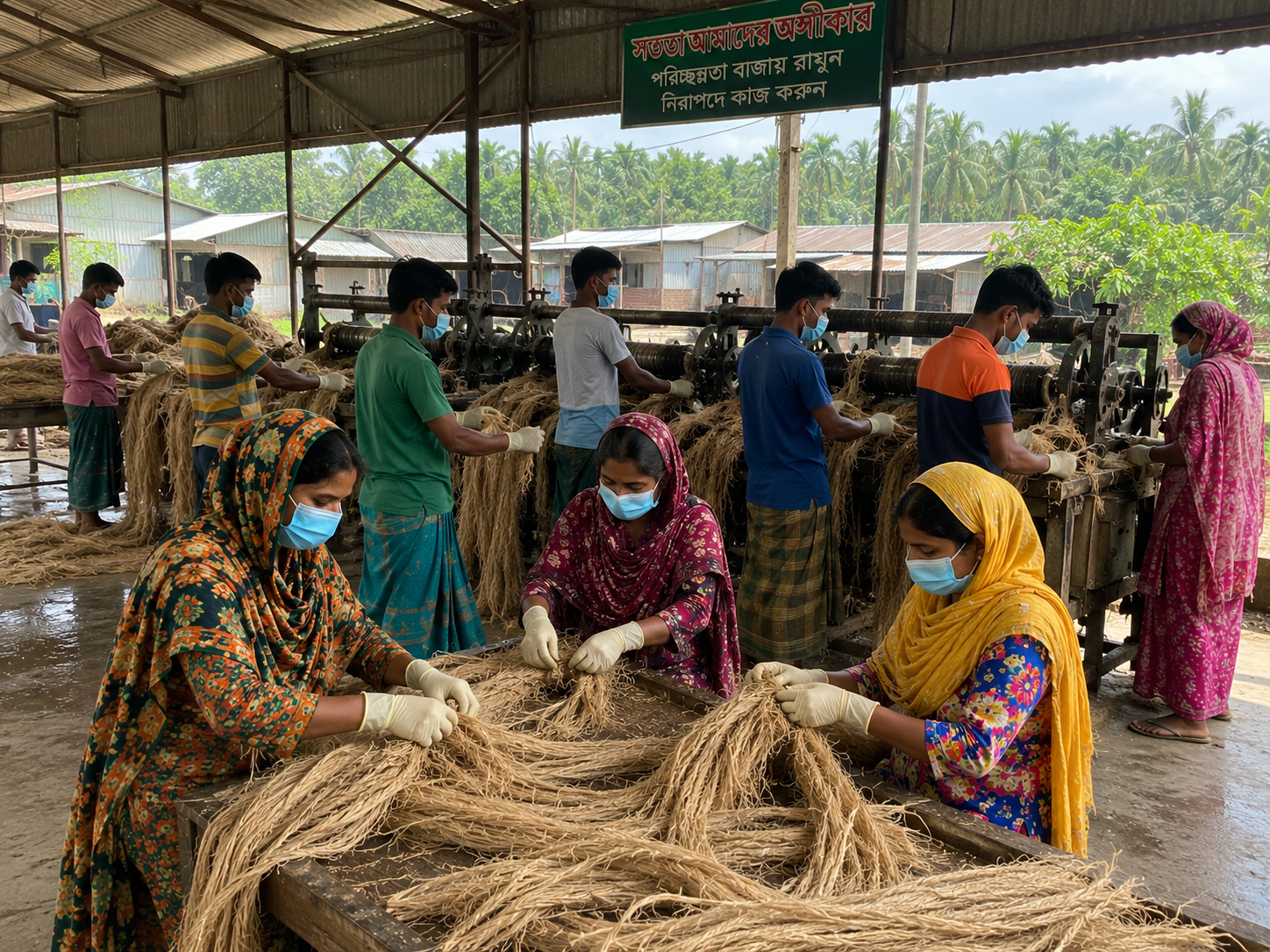
Women often play central roles in harvesting, fiber extraction, and artisanal processing. Fair labor practices and inclusive supply-chain models can amplify social benefits and improve household incomes.
Economic challenges
Price volatility, competition from synthetics, and infrastructure deficits (retting facilities, drying yards, transportation) create challenges for producers. Investment in processing infrastructure and market access helps stabilize incomes and improve product quality.
Supply-Chain Realities for U.S. Buyers
Traceability and transparency
Global supply chains can be opaque. U.S. brands should insist on supplier transparency: mill audits, chain-of-custody documentation, and third-party certifications reduce reputational risk and improve product claims’ credibility.
Lead times and logistics
Sourcing from South Asia involves longer lead times, seasonal availability, and shipping constraints. Plan orders well in advance, include buffer stock, and build relationships with reliable mills to minimize delays.
Quality variability
Natural fiber variability means sample testing is crucial. Request tensile strength data, colorfastness tests, and physical samples before large orders. Work with mills on consistent retting and finishing protocols.
Cost considerations
While raw jute can be cost-effective, sustainable processing, certifications, and ethical labor premiums increase costs. Positioning products with strong sustainability narratives can justify price premiums in the U.S. market.
Innovations Improving Jute’s Sustainability and Performance
Cleaner retting technologies
Enzymatic retting, microbial cultures, and tank-based systems reduce effluent loads and speed processing while improving fiber consistency.
Mechanical and controlled drying
Improved drying infrastructure reduces fiber contamination and microbial growth, enhancing export readiness.
Jute composites and bio-resins
Developments in bio-resins and fabrication techniques enable jute to be used in automobiles, furniture, and construction — replacing some petroleum-based composites with lower-carbon alternatives.
Upcycling and circular models
Creative reuse of jute sacks, mill offcuts, and reclaimed jute creates artisanal products, reducing waste and supporting community enterprises.
How to Choose and Buy Responsible Jute Products
For consumers
Look for clarity: product descriptions should state country of origin, processing methods, and any certifications.
Prefer low-impact finishes: OEKO-TEX, GOTS (where applicable), or brands that disclose dye and coating details.
Inspect construction: tight weaves, reinforced seams, and quality hardware increase longevity.
Match the product to the use-case: untreated jute for indoor décor, treated jute for occasional outdoor use, or alternative materials for constant outdoor exposure.
For brands and procurement teams
Vet suppliers: request mill audits, environmental compliance reports, and worker-safety documentation.
Test materials: independent lab testing for tensile strength, colorfastness, and chemical residues protects brand quality.
Build long-term partnerships: invest in supplier capacity-building to improve retting, finishing, and waste management.
Consider blended products: blends can open new markets but require transparency about end-of-life impacts.
Care and Maintenance: Extending Product Life
General tips
Vacuum jute rugs frequently to remove grit that wears fibers.
Blot spills immediately; avoid heavy scrubbing.
Spot-clean with mild soap and cool water; air dry thoroughly.
Avoid prolonged moisture and humid storage to prevent mildew.
Rotate rugs and move heavy furniture occasionally to distribute wear.
Repair and reuse
Encourage repairability: replace hardware, re-stitch seams, and add backing to worn rugs. Upcycling worn jute into smaller items reduces waste and supports creative circularity.
Regulatory and Market Trends Shaping Jute’s Future
Plastic reduction policies
U.S. and international policies limiting single-use plastics, along with industry pledges by retailers, create demand for biodegradable packaging — a natural outlet for jute.
Retailer sustainability commitments
Major retailers increasingly require supply-chain transparency and certifications. Jute suppliers that can provide traceability and environmental compliance become preferred partners.
Consumer education and demand
As consumers learn more about fiber lifecycles, materials like jute with clear end-of-life benefits gain traction — particularly when paired with attractive design and quality.
Case Studies: Success Stories and Scalable Models
Fair-trade cooperatives
Cooperatives in Bangladesh that combine fair-wage practices with investments in retting tanks show improved fiber quality, higher prices for farmers, and reduced environmental impact.
Brand partnerships
U.S. brands partnering with mills for exclusive blends and stabilized supply have launched successful product lines that highlight traceability and community benefits.
Tech-enabled mills
Mills investing in effluent treatment, controlled retting, and mechanized drying produce export-grade jute that meets international safety and quality standards.
Common Myths and Facts About Jute
Myth: Jute is only for cheap sacks.
Fact: Modern processing and design elevate jute for lifestyle goods, technical applications, and high-quality home textiles.
Myth: Jute always pollutes water.
Fact: Traditional retting can cause pollution, but tank-based and enzymatic retting significantly reduce environmental impact.
Myth: Jute isn’t durable.
Fact: Properly processed jute is strong and long-lasting for many uses; design and finishing determine end-user durability.
The Road Ahead: Opportunities and Challenges
Opportunities
Growing demand for biodegradable packaging
Innovations in composites and blended textiles
Increasing retail and regulatory focus on sustainable materials
Challenges
Need for investment in clean processing infrastructure
Ensuring fair labor and community benefits
Managing transport emissions and improving regional value capture
Conclusion
Jute’s journey from farm to fiber is both ancient and evolving. Its environmental advantages — rapid renewability, low chemical inputs, and biodegradability — make it an attractive option for brands and consumers seeking lower-impact materials. But those benefits hinge on the choices made during retting, finishing, and manufacturing. Cleaner retting technologies, transparent supply chains, fair labor practices, and thoughtful finishing are the levers that convert jute’s potential into real-world sustainability.
For U.S. buyers and brands, the path to responsible jute sourcing involves due diligence: auditing suppliers, testing materials, and investing in long-term partnerships that elevate fiber quality and local livelihoods. For consumers, choosing well-made jute products with clear care instructions and ethical claims helps ensure both product longevity and positive environmental outcomes.
From the sun-drenched fields where jute sprouts to the mills that spin and weave it into everyday goods, every step matters. When handled with care and intention, jute can be a powerful tool in a more sustainable materials portfolio — a golden fiber helping to build greener fashion, packaging, and home goods industries.
Further Reading and Resources
International Jute Study Group (IJSG)
Food and Agriculture Organization (FAO) publications on bast fibers
Fair Trade certification bodies and standards
OEKO-TEX and other textile safety standards