 May 15, 2026 - 0
Minutes read
May 15, 2026 - 0
Minutes read
How Long Does It Take to Grow Jute? From Seed to Finished Product
How Long Does It Take to Grow Jute? From Seed to Finished Product
Stage 1: Growing Jute from Seed to Harvest
Seed Germination and Early Growth
The jute cultivation process begins with planting seeds during the warm and rainy season. Under favorable conditions, jute seeds typically germinate within 4 to 7 days. During the first month, young plants establish strong root systems and begin rapid vertical growth.
Maturity and Harvest Readiness
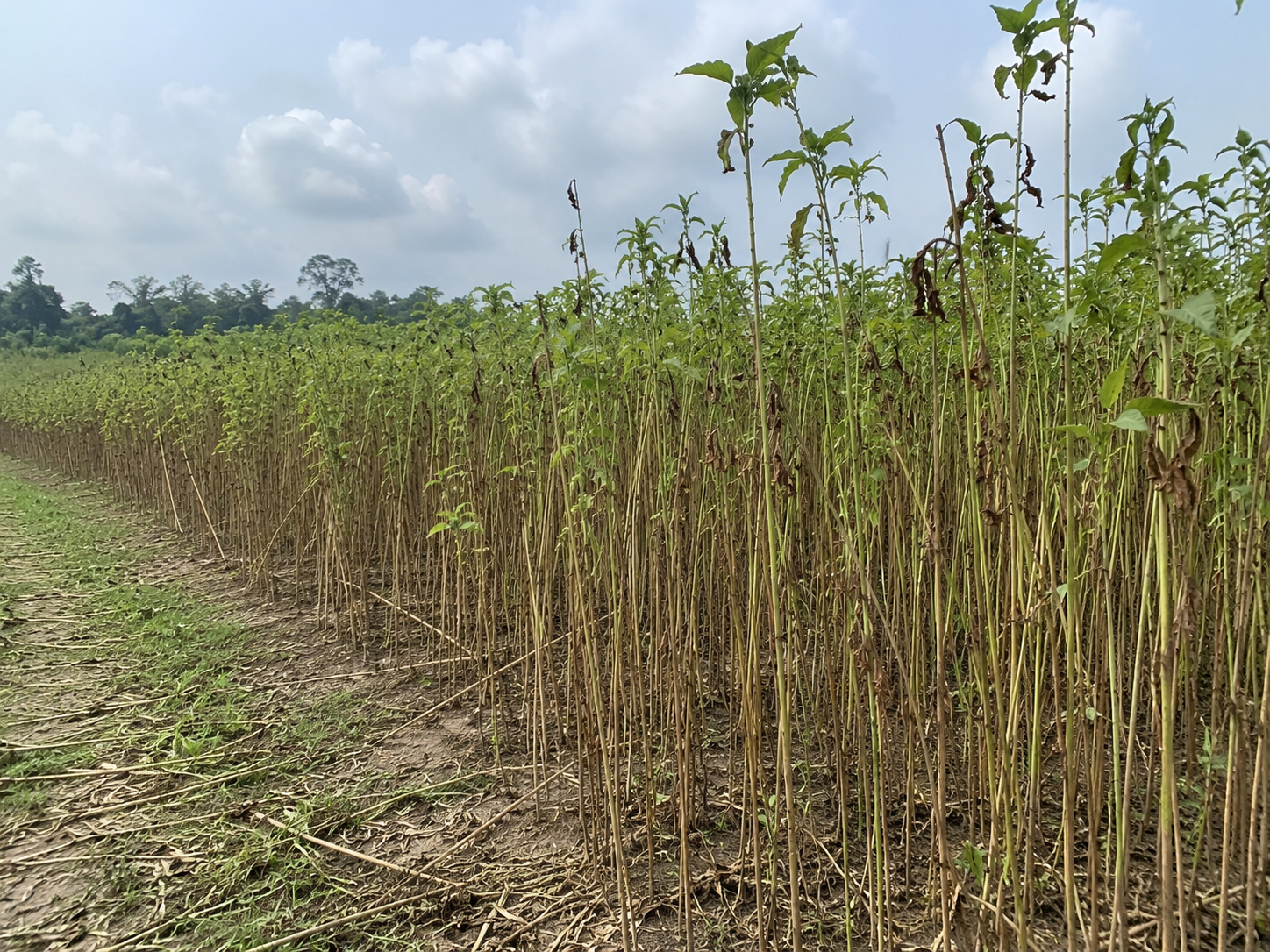
Jute is one of the fastest-growing crops in agriculture. Most varieties reach maturity within 100 to 120 days, or approximately three to four months after planting. By this stage, plants can grow between 10 and 15 feet tall and are ready for harvesting.
Stage 2: Harvesting and Fiber Extraction
Harvesting the Jute Plants
Once the plants reach maturity, farmers cut the stalks close to the ground and bundle them together. Harvesting usually takes several days, depending on farm size and labor availability.
Retting and Fiber Separation
After harvesting, the bundled stalks are submerged in water through a process known as retting. Traditional retting typically takes 10 to 20 days, depending on water temperature and quality. During this period, natural microorganisms break down the plant tissues, allowing fibers to be separated from the woody stalks.
Stage 3: Drying and Preparing the Raw Fiber
Washing and Sun Drying
After fiber extraction, workers wash the fibers thoroughly to remove impurities. The fibers are then hung in open sunlight to dry naturally. This drying process generally takes 2 to 5 days, depending on weather conditions.
Grading and Bundling
Once dried, the fibers are sorted based on color, strength, length, and quality. Manufacturers purchase graded fibers according to their intended applications, such as textiles, ropes, packaging, or industrial materials.
Stage 4: Manufacturing Jute into Usable Materials
Spinning and Yarn Production
Raw jute fibers are transported to jute mills, where they undergo softening, carding, drawing, and spinning. Modern machinery transforms the fibers into yarns of various thicknesses and strengths. This process can take several days, depending on production volume.
Weaving and Product Fabrication
The spun yarn is then woven or braided into fabrics, ropes, sacks, rugs, geotextiles, and other products. Additional finishing processes such as dyeing, coating, printing, or stitching may also be required, depending on the final product specifications.
Stage 5: Creating the Final Jute Products
Product Assembly and Quality Control
Finished jute fabrics and materials are cut, stitched, assembled, and inspected for quality. Products such as shopping bags, home décor items, furniture materials, and industrial fabrics undergo strict quality checks before entering the market.
Packaging and Distribution
After manufacturing, products are packaged and shipped to wholesalers, retailers, and consumers worldwide. Depending on the destination, transportation and distribution can add several days or weeks to the overall timeline.
Typical Timeline from Seed to Finished Product
Average Production Time Breakdown
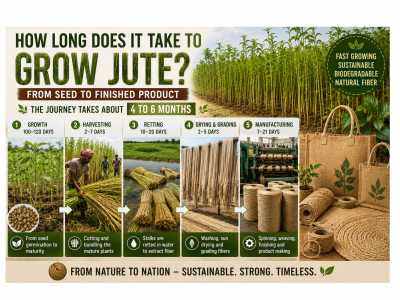
- Seed Germination: 4–7 days
- Crop Growth: 100–120 days
- Harvesting: 2–7 days
- Retting Process: 10–20 days
- Drying and Grading: 2–5 days
- Manufacturing and Fabrication: 7–21 days
In total, the journey from seed to finished jute product generally takes 4 to 6 months, depending on farming conditions and manufacturing complexity.
Factors That Affect Production Speed
Weather conditions, water availability, retting methods, machinery efficiency, labor availability, and product complexity all influence how quickly jute can move through the production process.
Conclusion
Jute is remarkably efficient compared to many other natural fibers. Within just a few months, a tiny seed can grow into a mature crop, be processed into strong fibers, and be transformed into a wide range of sustainable products. This rapid production cycle, combined with jute's renewable and biodegradable nature, makes it one of the most environmentally friendly fibers available today. As demand for sustainable materials continues to grow, jute's fast-growing lifecycle will remain one of its greatest advantages.